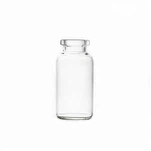

What is low borosilicate glass What is borosilicate glass What are the characteristics of glass?
Glass is not only transparent, but also has high strength and hardness. It is an indispensable material in daily production and life. There are many types of glass, in addition to the more common float glass and tempered glass, there are also varieties with special properties such as hot-melt glass, laminated glass, and frosted glass. Borosilicate glass is a type of glass that we often come into contact with. Its products include various medical bottles and many cooking utensils and water utensils. It is not only more transparent than ordinary glass, but also harder. For more information about borosilicate glass, please read below.
All standards ISO 4802. 1 - 1988 "Water resistance of the inner surface of glassware and glass containers - Part 1: Determination and classification by titration" define borosilicate glass (including neutral glass) as containing boron trioxide (B2O3 ) 5~13% (m/ m) glass, but ISO 12775 "Classification of glass components and test methods for normal mass production" issued in 1997 defines borosilicate glass (including neutral glass) containing diboron trioxide (B2O3) more than 8 %(m/m) .
According to the principle of glass classification in 1997, the glass material with B2O3 6% (m/ m) widely used in China's pharmaceutical glass bottle industry for many years should not be called borosilicate glass or neutral glass. The glass particle method water resistance and inner surface water resistance test of the material is not up to level 1 and HC1 level, or is between the edge of level 1 and level 2. Practice has also proved that some of this type of glass will appear in use Neutral unqualified or peeling phenomenon, but this kind of glass has been produced and used in our country for many years, the new standard retains the glass of this material and stipulates that its B2O3 content should meet the requirements of 5 - 8% (m/ m), clearly It is defined that this type of glass cannot be called borosilicate glass (or neutral glass), but it is named low borosilicate glass.
2. What is borosilicate glass? What are the characteristics of glass?
Glass containing boron trioxide (B2O3) 5~13 % (m/ m) is called borosilicate glass. It has the following four types:
2.1 Low-alkali borosilicate glass: refers to SiO2-B2O3-R2O composition, low R2O content, high SiO2 glass, small linear expansion coefficient, small dispersion, good chemical stability, high thermal stability, and good electrical insulation. Glass (such as Pyrex), heat-resistant cooker, ampoule glass, neutral glass, electric vacuum glass, optical glass, LCD substrate, solar panel and heat collector.
2.2 Alkaline earth borosilicate glass: refers to SiO2-B2O3-RO composition, such as SiO2-B2O3-PbO composition, which is used to prepare optical glass and low-temperature glaze; SiO2-B2O3-PbO/ZnO composition is used for crystalline powder solder, as a cathode Tube (CRT) sealing; SiO2-B2O3-ZnO composition, used for passivation of rectifiers and electronic devices.
2.3 Lanthanum borosilicate glass: refers to SiO2-B2O3-La2O3-RmOn composition, such as SiO2-B2O3-La2O3-CaO-ZnO-ZrO2 composition has high refractive index, low dispersion, good chemical temperature resistance, low devitrification ability, used as optical glass.
2.4 Rare earth-doped borosilicate glass: based on SiO2-B2O3-RmOn, laser glass doped with Pr and Nd, nonlinear optical glass doped with Au, Ag and Cu, doped with CdS, ZnS:Mn nanocrystals Glowing glass.
3. Related concepts
3.1 Glass
Glass is an amorphous inorganic non-metallic material, generally made of various inorganic minerals (such as quartz sand, borax, boric acid, barite, barium carbonate, limestone, feldspar, soda ash, etc.) of. Its main components are silicon dioxide and other oxides. The chemical composition of ordinary glass is Na2SiO3, CaSiO3, SiO2 or Na2O·CaO·6SiO2, etc. The main component is silicate double salt, which is an amorphous solid with irregular structure. Widely used in buildings, used for wind and light transmission, belongs to the mixture. There are also colored glass that is mixed with certain metal oxides or salts to show color, and tempered glass made by physical or chemical methods. Sometimes some transparent plastics (such as polymethyl methacrylate) are also called glass.
3.2 Silica
Silicon dioxide, chemical term, pure silicon dioxide is colorless, solid at room temperature, chemical formula is SiO?, insoluble in water. Insoluble in acid, but soluble in hydrofluoric acid and hot concentrated phosphoric acid, and can work with molten alkalis. There are two kinds of crystalline silica and amorphous silica in nature. Silica is widely used, mainly used to make glass, water glass, pottery, enamel, refractory materials, airgel felt, ferrosilicon, molding sand, elemental silicon, cement, etc. In ancient times, silica was also used to make porcelain The glaze and carcass. Ordinary stones are mainly composed of silica and calcium carbonate.