

Rubber Stopper
ZCP is located in Chongqing City,China.Its Chinese full name is Chongqing Zhengchuan Pharmaceutical packaging Co., Ltd.ZCP specializes in the R&D and production of pharmaceutical tubular glass vials and caps almost 40 years.The company has four branch factories,intelligent stereoscopic warehouses,and over 2,000+employees. In the year of 2017,ZCP became the first private enterprise in pharmaceutical glass packaging field to be listed in the main stock market in China.
Why Choose Us
High Production Capacity
The company has four branch factories and three large-sized production bases, covering a land of more than 200,000 m2. The company has 8 furnaces to produce glass tubing and more than 600 sets of high-precision devices used for production of vials and caps.
Broad Market
Relying on its great production capacity and famous brand, Zhengchuan has established a nationwide sales service network and has established long-term friendly cooperation relations with more than four hundred customers in China, which makes the company enjoy a good reputation at home and abroad.
Our products sell well in several regions in the world, e.g. South America, Southeast Asia, Europe and Asia.
Wide Product Range
The company possesses a modern technology research & development center and an integrated manufacturing center of pharmaceutical glass tubing, glass vials and auxiliary caps. The company mainly produces various types of transparent and amber tubular glass injection vials, tubular glass oral liquid vials, tubular glass screwed-neck vials and ampoules.
Quality Assurance
All products would enter a closed warehouse directly from the workshop via mechanical automation, so as to eliminate pollution sources due to transport of products and entrance of staffs and reduce the percentage of pollution and damage of products.
All procedures are controlled by computer that connected with the Intranet of the company. It could realize the integration of management and control, achieve clear entry and stock out in warehouses, and eliminate the risks of wrong or mixed delivery of products.
-
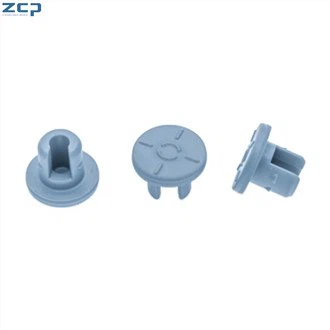 Pharmaceutical Rubber Stoppers For Injection Freeze Dryin...Our factory manufactures best quality pharmaceutical rubber stoppers for injection freeze drying powder. We’ve huge edges over price, quality, delivery & service, etc. We feature ourself as theAdd to Inquiry
 -
 Factory Pharma Rubber Stoppers for Oral Liquid BottlesWe’re a professional modernized manufacturer of pharma rubber stoppers for oral liquid bottles. Our rubber stoppers are competitive in price, best in quality with different dimensions. Our factory isAdd to Inquiry


A rubber stopper, also known as a bung, is a laboratory tool used to seal containers and prevent the escape of gases or liquids. It is typically made of rubber or another flexible material and comes in a variety of sizes and shapes to fit different types of containers.
Rubber stoppers often have a tapered shape, allowing them to be easily inserted into the opening of a container, and some may have a hole in the center to allow for the insertion of a thermometer or other instrument.
Rubber stoppers are commonly used in chemistry, biology, and other scientific fields for tasks such as sealing test tubes, flasks, and other containers during experiments or storage. They can also be used in industrial settings for sealing pipes and other equipment.
Benefits of Rubber Stopper
Good sealing performance
The rubber plug has good sealing performance, which can avoid problems such as leakage, contamination, and oxidation of drugs. When the drug is filled into the injection bottle or infusion set, the butyl rubber plug tightly seals the bottle mouth to keep the drug intact and prevent the drug from being contaminated and affected by the external environment.
Good compatibility between rubber plugs and drugs
The rubber plug has good compatibility with drugs. Since the rubber plug itself is an inert material, it will not react with most drugs, nor will it release harmful substances or produce adverse effects. This makes rubber plugs widely used in the pharmaceutical industry, including APIs, injections, blood products, and biological agents.
Corrosion resistance and toughness
The rubber plug also has corrosion resistance and toughness. It can withstand harsh environments such as high temperature and high pressure, acid and alkali corrosion, and will not break or leak due to long-term use. This makes rubber plugs an indispensable part of pharmaceutical packaging materials and is widely favored by pharmaceutical factories and pharmaceutical packaging manufacturers.
Ensure the quality and effectiveness of drugs
The rubber plug has good advantages, which can ensure the quality and effectiveness of drugs and protect people's health and safety. In future development, rubber plugs will continue to be optimized and upgraded to adapt to the ever-changing needs and requirements of the market.
Types of Rubber Stoppers
Solid Rubber Stoppers
These are the most common type, composed of a single piece of rubber. They are available in various sizes to fit different containers.
Two-Hole Rubber Stoppers
These stoppers feature two holes for inserting tubing or other equipment. They are commonly used in chemistry labs for experiments involving gas or liquid transfer.
Three-Hole Rubber Stoppers
These stoppers possess three holes for inserting tubing or other equipment. They are frequently used in chemistry labs for experiments requiring the passage of multiple gases or liquids.
Silicone Rubber Stoppers
These stoppers are made of silicone rubber, a synthetic rubber known for its heat resistance and chemical inertness. They are commonly employed in pharmaceutical and food processing applications.
How Rubber Stoppers Preserve Medications
Maintaining Aseptic Conditions with Rubber Stoppers
Rubber stoppers play a pivotal role in preventing microbial contamination. When properly inserted into medication containers, they create a barrier that inhibits the entry of microorganisms, thereby maintaining aseptic conditions. This is particularly essential for injectable medications, which are highly susceptible to bacterial growth.
Preventing Moisture Ingress and Contamination
Moisture can significantly impact the stability and effectiveness of medications. Rubber stoppers act as moisture barriers, preventing the ingress of water vapor, which can lead to moisture-sensitive drug degradation. By creating a tight seal, rubber stoppers help preserve the desired moisture content within the medication container.
Ensuring Proper Seal and Preservation of Medications
Rubber stoppers provide a reliable sealing mechanism that ensures proper closure and containment of medications. Their flexible nature allows them to adapt to the container's shape, creating a tight seal that prevents leakage and exposure to external elements. This seal helps safeguard the medication's integrity and extends its shelf life.
Extending Medication Shelf Life through Barrier Properties
Rubber stoppers possess excellent barrier properties, preventing oxygen and other gases from permeating into the medication container. Oxygen exposure can lead to oxidation reactions, causing the degradation of sensitive drugs. By effectively blocking oxygen ingress, rubber stoppers contribute to prolonging medication stability and extending their shelf life.

1) Scientific use of rubber stoppers
Rubber stopper are used for scientific purposes in laboratory. Mostly in chemical and science laboratories, there are various chemicals that need to be covered. Some of the chemicals are found to escape when kept opened. Various processes are being tested at laboratories world-wide and chemicals are needed to be kept carefully. They must be handled with care to avoid dangerous life taking incidents.
2) Chemical applications of rubber stoppers
Most of the hazardous and dangerous chemicals known so far are covered with rubber stoppers. One of the most dangerous substances to be treated in laboratories are acids which are covered with rubber stoppers. Acids need some specific ratio of substances of which plastics are made that keep them from affecting the rubber cork. While the other substance if used to cover chemicals may react with them to degenerate them hence they cannot be used to pack acidic chemicals.
3) Commercial uses of rubber stoppers
Commercially there are many uses of rubber stoppers as there are many equipment and furnaces that are working together to make various products. These furnaces use various kinds of rubber stoppers having different number of holes in them. Some rubber stoppers have on, two or more holes in it depending upon its usage. Holes in rubber stoppers are made for exchanging air from inside and outside the environment.
4) Industrial uses of rubber stoppers
Rubber stoppers are industrially used in industrialization of many products. In manufacturing of many products rubber stoppers are used to cover the openings of the containers. The containers contained many chemicals and industrial substances that need to be kept at a specific temperature range and require a certain amount of moisture. This is the reason why certain amount of holes are made into the rubber stoppers, they allow a required amount of moisture to be present inside the lid cover to keep the substance in usable state till the end. It is known so far then when such rubber stoppers are not used mostly the chemical substances go waste due to temperature changes.
Step 1: Rubber formulation
To ensure the highest quality rubber stoppers, the formulation process begins with the selection of certified raw materials and approved auxiliaries. These materials undergo rigorous testing to ensure they meet the necessary standards for medical applications. Raw material dispensing is a crucial step in the manufacturing process as it ensures the accurate measurement and proper mixing of components. This precision is essential in creating high-quality rubber stoppers.
Step 2: Compounding and mixing
After the careful selection of raw materials and rubber formulation, the subsequent phase involves compounding and mixing. Here, the rubber undergoes a meticulous blending with various additives to attain the specified physical and chemical properties. These additives encompass curing agents, accelerators, antioxidants, and processing aids.
Step 3: Calendering and moulding
After the mixing process, the rubber compound is subjected to the calendering process to dimension the sheet material. This process involves passing the compound through multiple rollers to achieve the desired thickness and smoothness. The calendered sheet material is then ready for the compression molding process.
Step 4: Optional coating and trimming
The optional coating process adds even more value to the rubber stoppers by enhancing their functionality. These coatings are carefully selected to improve handling and machine compatibility. For instance, a fluoro-coated barrier provides enhanced safety and durability for the most sensitive drug products. It acts as a shield, reducing the interaction with contaminants and the container itself.
What Equipment Do I Need To Drill a Hole In a Rubber Stopper?
When drilling a hole in a rubber stopper, it is important to use the appropriate equipment to ensure a clean and precise hole. Here are the tools you will need:
Rubber stopper
Choose a stopper that is the appropriate size and material for your project. Rubber stoppers come in various sizes and hardness levels, so be sure to select one that matches your needs.
Drill
Use a handheld power drill with variable speed settings. It is recommended to use a drill with a cord, as cordless drills may not provide enough power for drilling through rubber.
Drill bits
Select a drill bit that is designed for drilling through rubber. These bits have a pointed tip and sharp edges to cut through the material cleanly. It is important to match the size of the drill bit to the desired hole size.
Lubricant
Apply a small amount of lubricant, such as silicone spray or dish soap, to the drill bit. This will help reduce friction and prevent the rubber from sticking to the bit.
Glass stoppers and rubber stoppers are common sealing devices in the laboratory, used to seal the mouth of containers or equipment. They have some differences in use in experimental operations, and the following is their comparison:
1. Material properties:
Glass stoppers: Glass stoppers are usually made of glass materials, with good acid and alkali resistance and chemical inertness. It is compatible with various solutions and reagents, and will not contaminate the sealed substances.
Rubber stoppers: Rubber stoppers are generally made of rubber materials (such as silicone rubber, nitrile rubber, etc.), which are elastic and soft. Rubber stoppers can provide better airtightness and sealing performance, and are suitable for a variety of solvents and reagents.
2. Sealing performance:
Glass stoppers: The sealing performance of glass stoppers is usually poor, because the surface of the glass may have tiny bumps or irregular shapes, which makes it difficult to completely seal the container. In addition, the glass stopper will also wear after long-term use, resulting in a decrease in sealing performance.
Rubber stoppers: Rubber stoppers are made of soft rubber materials and have good elastic recovery and sealing performance. It can better adapt to the shape of the container mouth, provide a reliable sealing effect, and reduce gas or liquid leakage.
3. Scope of use and adaptability:
Glass stopper: Glass stopper is often used in some experimental operations such as chemical synthesis, crystallization, distillation, etc., especially when experiments need to be carried out under high temperature or high pressure conditions. Glass stopper has good tolerance to high temperature and strong acid and alkali solutions.
Rubber stopper: Rubber stopper is widely used in the sealing of various containers and equipment in the laboratory, such as test tubes, flasks, round-bottom bottles, centrifuge tubes, etc. Rubber stopper is also often used to prevent gas or liquid leakage and maintain vacuum state.
4. Safety and ease of use:
Glass stopper: Glass stopper needs to be handled carefully when used, because incorrect insertion or removal may cause cracks or scratches. In addition, the pressure resistance of glass stopper is poor and cannot withstand excessive pressure.
Rubber stopper: Rubber stopper is relatively easier to use and operate because they are soft and elastic, and insertion and removal are relatively easy. Rubber stopper can also provide a certain buffer and protection effect, reducing the risk of damage during collision or fall.
Our Factory
Our company is the first to build a 3d warehouse in the same industry in China, mechanical automation closed warehouse, dust free storage, reducing the risk of mis-sending and mixing.


Certificate

FAQ
We're well-known as one of the leading rubber stopper manufacturers and suppliers in China. If you're going to buy high quality rubber stopper, welcome to get more information from our factory. Also, customized service is available.
