

Ampoule
Your Professional Ampoule Manufacturer
Chongqing Zhengchuan Pharmaceutical Packaging Co., Ltd. is an enterprise that is professionally engaged in research, development, and production of pharmaceutical tubular glass vials and caps. Our products include: Pharmaceutical Glass Vials, Ampoule, Glass Tube, Vial Cap, Pre-filled Syringe, Rubber Stopper, Bottle Screen Printing, Irregular Shape Bottle, Cosmetic Bottle.
-
 Pharmaceutical Neutral Borosilicate Glass Clear AmpoulesPharmaceutical Borosilicate Glass Injection Ampoules uses ultra-high-safety glass material, and all production links are strictly supervised to ensure a safe production environment, strict productAdd to Inquiry
 -
 Pharmaceutical Amber Neutral Borosilicate Glass AmpoulesHigh water resistance, high acid & alkali resistance, have good compatibility with drugs.Add to Inquiry
 -
 Neutral Borosilicate Glass Ampoule Bottle For Cosmetic An...Here are five essential aspects that make Pharmaceutical Neutral Borosilicate Glass Clear Ampoules stand out: 1. High-Quality Materials Our ampoules are made from high-quality borosilicate glass,Add to Inquiry
 -
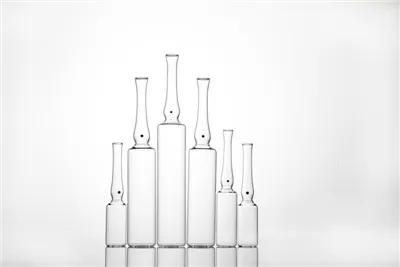 Neutral Borosilicate Glass Clear Ampoules For PharmaceuticalOur company produces neutral borosilicate glass ampoule bottles and neutral borosilicate glass tube injection bottles, which are all made of imported neutral borosilicate tubes. Because of its goodAdd to Inquiry
 -
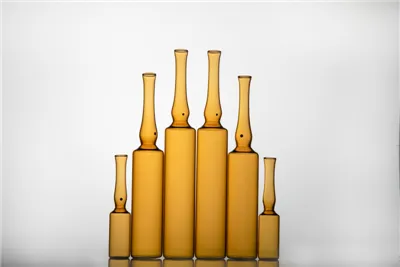 Pharmaceutical Neutral Borosilicate Glass Injection Clear...pharmaceutical glass ampoule using for the injection products ! the standard in safe and sterile packaging for pharmaceuticals! Our ampoules are also available in a range of sizes, from 1ml up toAdd to Inquiry
 -
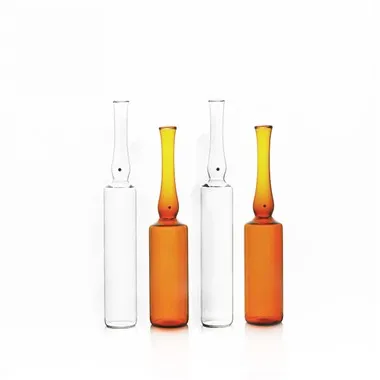 Medical Clear 2ml Middle Borosilicate AmpoulesMedical Clear 2ml Middle Borosilicate AmpoulesAdd to Inquiry
 -
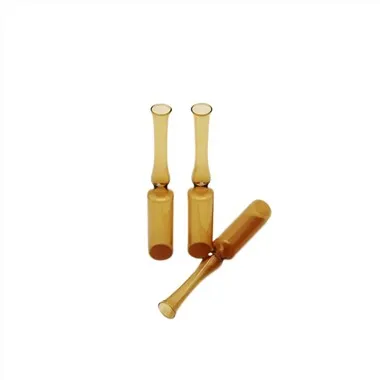 2ml Screen Printing Low Borosilicate Glass AmpouleZCP 2ml Screen Printing Low Borosilicate Glass AmpouleAdd to Inquiry
 -
 5ml 10ml Glass Ampoule For Pharma5ml 10ML glass ampoule for pharma. Dimension: YBB or ISO standard. Volume: 1ML 2ML 3ML 5ML 10ML 15ML 20ML.Add to Inquiry
 -
 YBB Pharmaceutical Glass AmpouleHigh quality YBB standard amber clear Pharmaceutical glass ampoule with screen printing,We have Chinese standard and ISO standard ampoule,the quality is very good,Includes all sizes you can choose,WeAdd to Inquiry
 -
 Amber Pharma Neutral Boron Ampoule BottleWe’re dealing in various neutral boron ampoules with best quality and competitive price. Our factory has the most advanced integrated industrial chain for pharma neutral boron glass. Provide completeAdd to Inquiry
 -
 Pharma Neutral Boron AmpouleWe offer best quality neutral ampoules with competitive price & fast delivery. Our factory highly value neutral boron ampoule quality. We’re a professional & modernized factory withAdd to Inquiry
 -
 Clear Ampoule Made of Neutral Borosilicate Glass TubingsHigh water resistance, high acid & alkali resistance, have good compatibility with drugs.Add to Inquiry


Why Choose Us
High Production Capacity The company has four branch factories and three large-sized production bases, covering a land of more than 200,000 m2. The company has 8 furnaces to produce glass tubing and more than 600 sets of high-precision devices used for production of vials and caps.
Broad Market Relying on its great production capacity and famous brand, Zhengchuan has established a nationwide sales service network and has established long-term friendly cooperation relations with more than four hundred customers in China, which makes the company enjoy a good reputation at home and abroad.
Our products sell well in several regions in the world, e.g. South America, Southeast Asia, Europe and Asia.
Wide Product Range The company possesses a modern technology research & development center and an integrated manufacturing center of pharmaceutical glass tubing, glass vials and auxiliary caps. The company mainly produces various types of transparent and amber tubular glass injection vials, tubular glass oral liquid vials, tubular glass screwed-neck vials and ampoules.
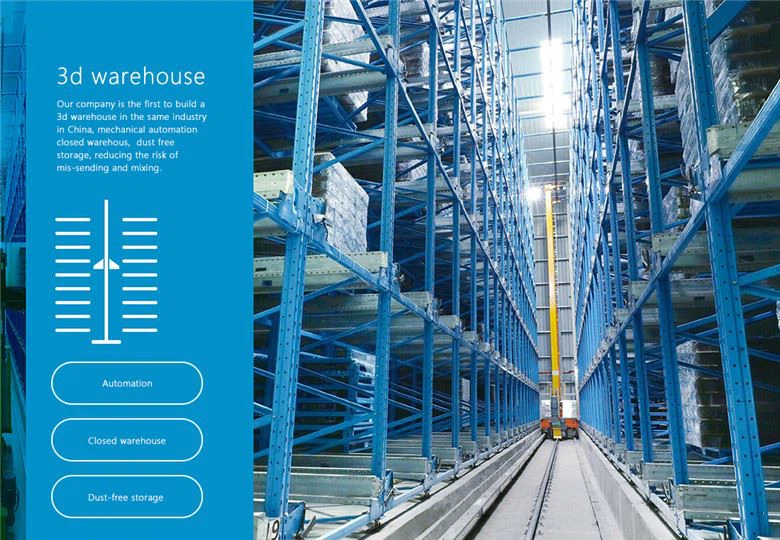
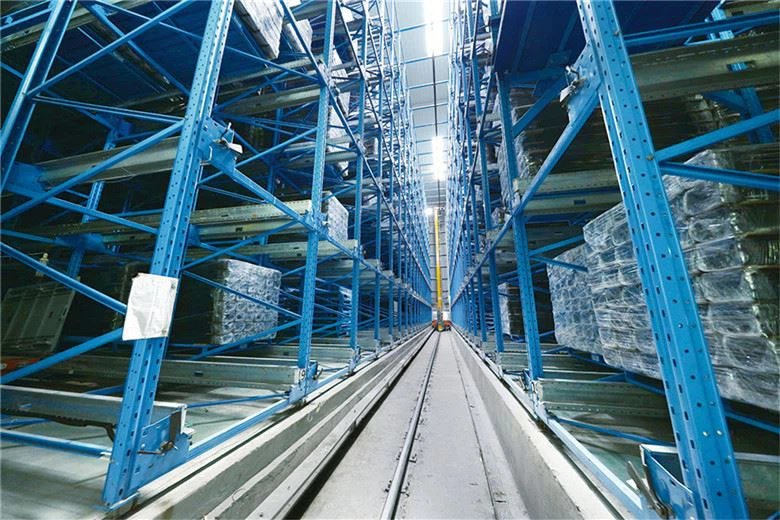
Quality Assurance All products would enter a closed warehouse directly from the workshop via mechanical automation, so as to eliminate pollution sources due to transport of products and entrance of staffs and reduce the percentage of pollution and damage of products.
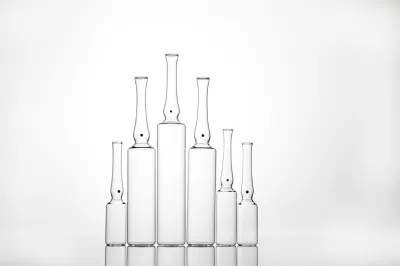
An ampoule (also ampul and ampule) is a small sealed vial which is used to contain and preserve a sample, usually a solid or liquid. Ampoules are usually made of glass.
Modern ampoules are most commonly used to contain pharmaceuticals and chemicals that must be protected from air and contaminants. They are hermetically sealed by melting the thin top with an open flame, and usually opened by snapping off the neck. The space above the chemical may be filled with an inert gas before sealing. The walls of glass ampoules are usually sufficiently strong to be brought into a glovebox without any difficulty.
Benefits of Ampoule
Security Our glass ampoules are 100% tamper-proof.
Special Looks The transparency gives your product a very special appearance.
Light Protection Our amber glass ampoules protect light-sensitive contents.
High Quality Glass With our ampoules, you can also pack your high-quality contents accordingly.
Chemical Resistance Our glass ampoules have a very high hydrolytic resistance and are therefore very suitable for products that require a stable pH value.
Heat Sterilizability Our glass ampoules can be heat-sterilized so that they can be cleaned (Depyrogenation), the filling and the sterile sealing under optimal and before.
Durability Our ampoules have an almost unlimited shelf life. So are suitable they are ideal for storing parenteral fluids, for example.
Sustainability In addition, glass ampoules are easy to recycle, making them very sustainable.
Strength and Tightness You don't have to worry about fragility, nor about your contents evaporating or other ingredients escaping to the outside. Our ampoules are 100% tight and tight.
Interaction The contact between your product and our ampoule does not have "interactions".
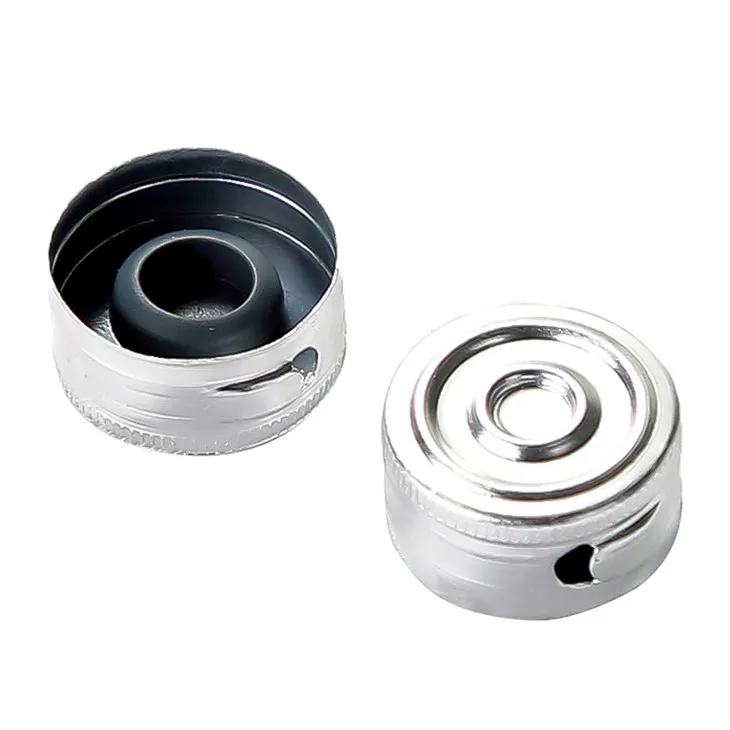
Features of Ampoule
- Ampoules for numerous drugs.
- Amber and clear pharma glass type I.
- Filling capacities from 1 to 30 ml.
- Straight-stem, funnel-type and closed ampoules (ISO types B, C and D).
- Customized shapes on request.
- Break systems: One Point Cut, Colour Break Ring and Score Rin.
- Targeted minimization and consistency of opening force.
- Special treatment with ammonium sulfate for greater surface resistance.
- Inner surface siliconization to provide a slide coating for optimum emptying of the ampoules.
- Optimized designs for lyophilization.
- Customized ceramic printing with heavy-metal-free inks.
- Identification with up to three colored code rings.

Common Types of Ampoule
Pre-scored Ampoules
These pre-scored medical glass ampoules offer excellent biological product preservation and extended shelf life for injectable content. Ampoule stems can be flame sealed to provide tamper evidence and are pre-scored for easy opening.
Cryogenic Ampules
These pre-scored glass ampoules offer excellent preservation of biological content and are suitable for sterilization and gas-phase liquid nitrogen cold storage applications. Ampoule stems can be flame sealed to provide tamper evidence and are pre-scored for easy opening.
Lyophilization Ampules
These glass ampoules are commonly used for small volume lyophilization samples. Pre-scored for easy opening.
Standard Ampoules
Commonly used for packaging of certified standards.

Applications of Ampoule
Pharmacy & Parapharmacy
Food supplement
Nutricosmetics
Phytotherapy & Oligotherapy
Medical & Dental
Veterinarian
Process of Ampoule
Two dimensional dimensions are essential for a glass ampoule:
the tip diameter determines the correct filling process.
the total length determines the correct path of the glass ampoules on the finishing line. The vertical machine sometimes produces short ampoules which, during finishing operations, can get in the way of the line and cause all the following ampoules to fall off, or even damage the printing screen.
The printing of the glass ampoules includes the inscriptions required by the customer laboratory. The printing is done by screen printing, using a glass enamel that must be baked.
The screens on which the glass enamel is applied are made from template (transparent film printed in black). The glass ampoule is lifted from the chain by a crowbar with rollers. It is positioned under the screen, which is animated by an alternating translation movement synchronized with the chain. It is therefore the screen that drives the ampoule in rotation, while the scraper passes the enamel through the mesh.
One glass ampoule is printed in the movement of the screen from left to right, and the next ampoule in the return movement.
The enamel of the printed glass ampoules needs to be annealed, as does the enamel used in the Self-breaking process (see below).
The annealing takes place in an oven, which is a tunnel kiln in which the glass ampoules travel. The temperature is around 600°C and the annealing time depends on the speed at which the ampoules move and the length of the oven.
If the annealing is insufficient, internal tensions may remain, detectable with a polariscope and/or the print will not hold. On the other hand, if the annealing is too strong, there is a risk of deforming the glass ampoules (often referred to as "bananas").
In order to avoid the use of this file, various self-breakable techniques have been developed. These breakables must be sufficiently fragile for the glass ampoule to open without difficulty, and at the same time sufficiently strong for the ampoule to withstand transport, filling, sealing, packaging (racking and boxing), etc.
Controlling the breaking force (the effort required to open the glass ampoule) is the main difficulty in making a good self-breakable. In addition, it must not generate any risk of leakage or of air entering the filled and closed ampoule and must not release any glass particles when opened.
At the end of the production line, after preliminaries and annealing, the glass ampoules are placed in polypropylene boxes, using automatic "automatic packers". The number of glass ampoules per box varies from 110 to 504, depending on the capacity of the ampoules.
The glass ampoules are delivered to the customer laboratory in the plastic box with the top open, and the customer laboratory fills the ampoules and seals them.
Certificate
Our company has worked out a set of perfect quality control system, among those from our competitors which is the first one that is ISO9002 and ISO9001:2008 certified successfully.
Our products are kept on the DMF record by FDA:
DMF Number Assigned:21564.
Low-borosilicate glass tubular injection vials: DMF Number Assigned: 21564
DMF Number Assigned:21565.
Neutral-borosilicate glass tubular injection vials: DMF Number Assigned: 21565

Our Factory
Our company is the first to build a 3d warehouse in the same industry in China, mechanical automation closed warehouse, dust free storage, reducing the risk of mis-sending and mixing.
Frequently Asked Questions
Q: What is the use of ampoule?
Q: How Ampoules are Made?
Q: What are the parts of the ampule?
Q: What do ampoules generally contain?
Q: What is the definition of ampule?
Q: What is the dot on the glass ampule?
(2)If there is a dot on the ampoule this shows where the weak point in the neck is and where the ampoule should break. Ensure the dot is facing away from you. Hold the ampoule in one hand, place the ampoule opener on to the top of the ampoule using the other hand.
Q: What is the difference between a vial and an ampoule?
Q: What are the different types of glass ampoules?
Q: What are the risks of glass ampoules?
Q: How are glass ampoules manufactured?
Q: Do you inject air into glass ampule?
Q: How many doses are in an ampule?
Q: Why are ampoules used in pharmacy?
We're well-known as one of the leading ampoule manufacturers and suppliers in China. If you're going to buy high quality ampoule, welcome to get more information from our factory. Also, customized service is available.
